

Night Revival
Across the Southeast, advocates, astronomers, and everyday stargazers are reclaiming the vast, starlit skies we've nearly lost

I AM NOT ONLY A STARGAZER but a sky-gazer. My eyes invariably turn upward. I revel in the vastness of the sky and what I can absorb with my limited sight.
Earlier this year, while curating our Summer 2025 issue, I had the idea to include full spreads bearing dark, star-drenched skies.
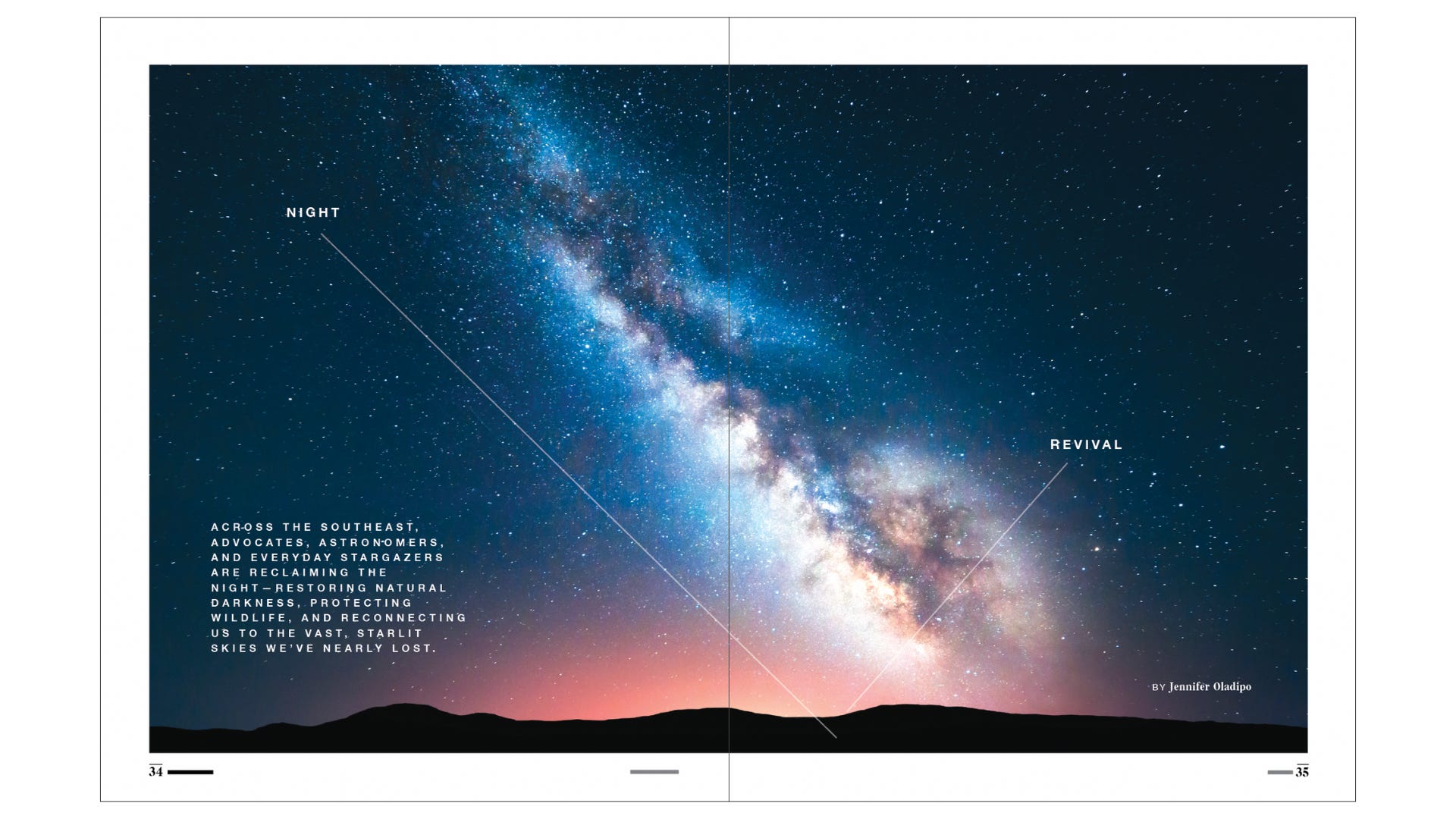
I turned to contributor Jennifer Oladipo to pen a story about the disappearing darkness and Southeastern places to access pure night. Below, find an excerpt of her article—and I hope you’ll grab a copy of our summer edition to read it in full. Jennifer’s writing alone is worth the investment, but hopefully these images will remind you of the brilliance of the night.—Blair Knobel, founder & editor in chief
IT WAS JARRING TO HEAR, but I understand why a dark-skies advocate said her neighbor’s floodlight had “trespassed” all over her property. The artificial light that can set a mood, beautify the built landscape, or make us feel safer can also be a blight. Increased urban lighting has set dark-sky advocates on a mission to reclaim natural nighttime darkness—and the bright skies it can reveal.
Seeing the Andromeda Galaxy spurred an awakening for Tom Reinert, the immediate past president of DarkSky International. “The Andromeda Galaxy in the dark sky is about as large as your index finger at arm’s length. It’s four times the diameter of the moon, and I could see it with the naked eye, and that just blew me away.” He wondered, “Where had this been all my life?” The answer was disturbing: It had been stolen by the gradual, unexamined spread of artificial light.
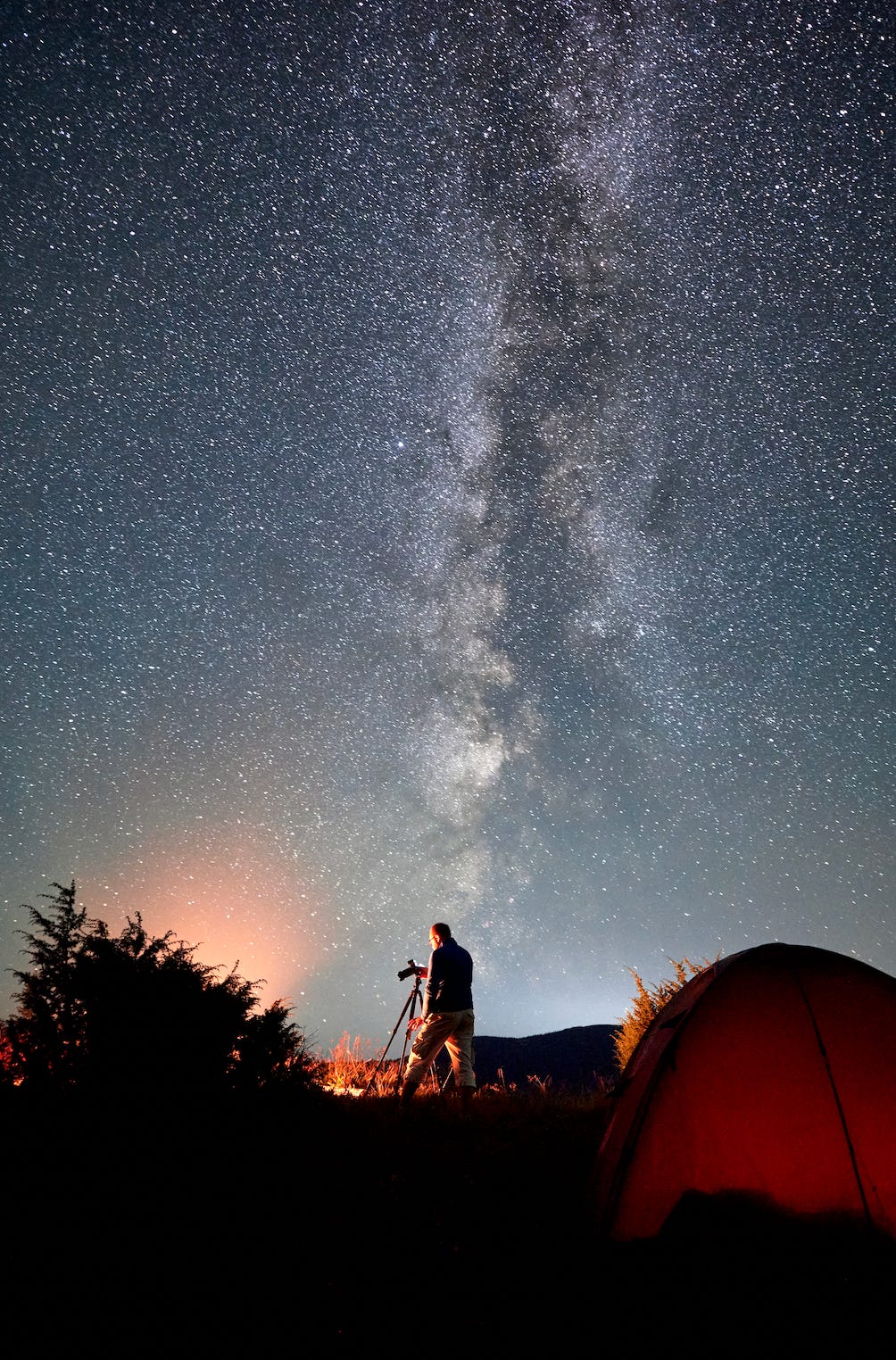
On the other hand, Laura Greenleaf, head of DarkSky Virginia, knew exactly what she was missing. Now leading one of DarkSky’s 90 volunteer-run chapters, she’d grown up on the western slope of the Blue Ridge Mountains, hanging out and walking her dog through a moonlit rural nightscape. She says relocation to Richmond, Virginia’s capital city, created a profound disconnection from something essential. “To move into a city of washed-out, artificially bright skies and ambient bright nights was deeply distressing,” Greenleaf says. When she took her young son outside to enjoy a snowy night, “everything was just orange.”
She estimates the city skies were probably several Bortles brighter than back home, naming the nine-level numeric scale used to measure light pollution at a particular location. The heart of Atlanta has class 8 or 9 skies. Is the Andromeda Galaxy visible? No. Constellations? Nope. Ground objects? Plain as day.
In a class 1 sky, however, you’ll not only see the galaxy, but it will even cast shadows. And ground objects are visible only as silhouettes.
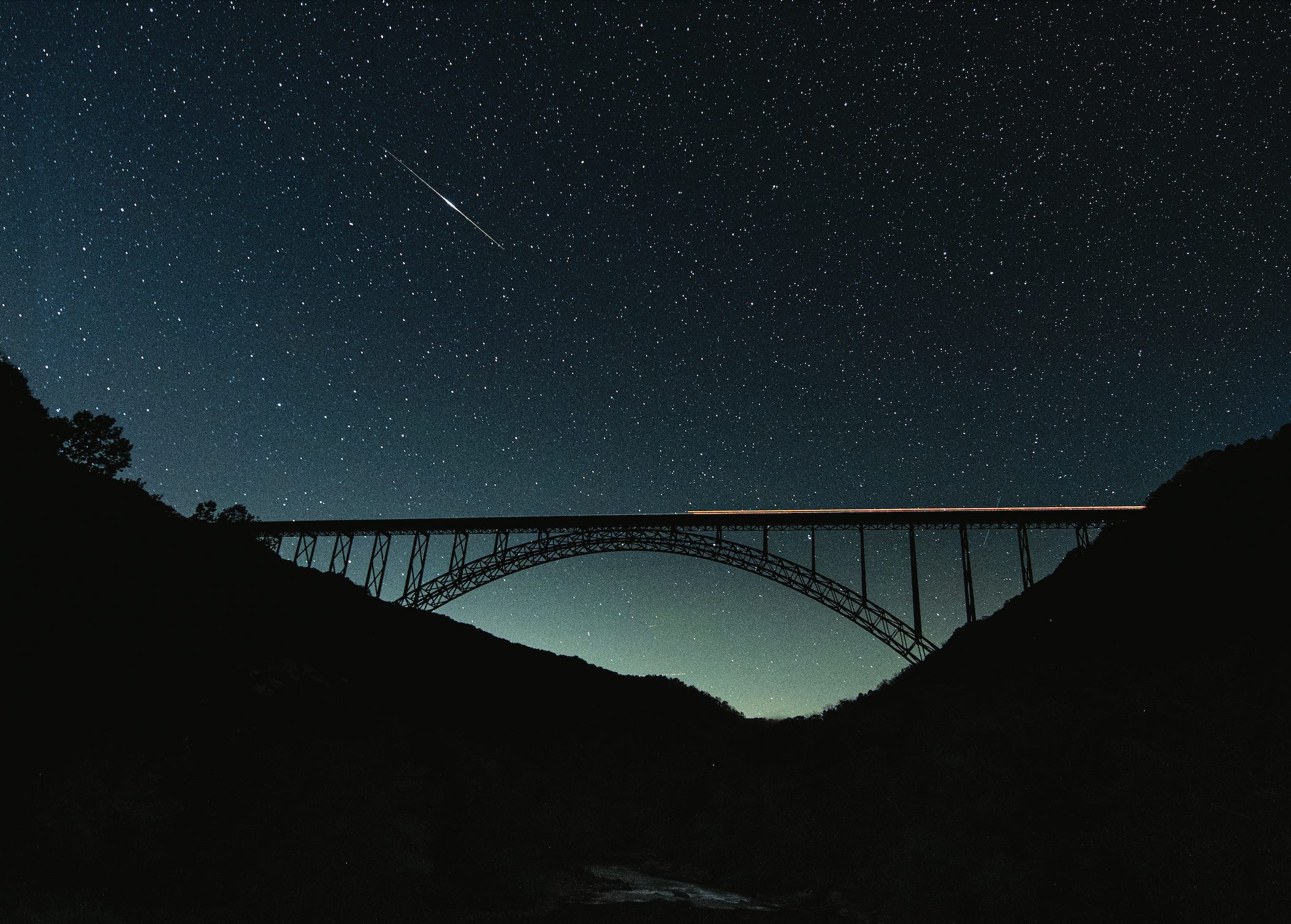
DEEP DARK JOY
Our presence in the deep dark could be the best defense for natural night skies. So, let’s go now. Let’s journey across the diverse landscape of the Southeast’s dark-sky places, each offering its unique encounter with the night.
We begin in Highland County, Virginia—the least populous county in the state—where Greenleaf still finds the biggest “wow” sky, where the darkness reveals the Milky Way with such clarity that it could change the way we see the night forever.
Riding southwest to Purlear in North Carolina’s mountains, not quite to the Tennessee border, we visit the Dark Sky Observatory at Appalachian State University, where Director Dan Caton and his team of volunteers set up telescopes for public viewings. So we don’t just stare at screens—we look through eyepieces to experience direct connection with celestial bodies.
Let’s keep going to Alabama. On Dauphin Island and other coastal spots, they use dimmer, more amber-colored lights that keep newly hatched sea turtles from wandering farther ashore and allow us another clear view of the Milky Way.
We can return to Alabama in the fall and join the Cahaba River Society and then camp at Perry Lakes Park along Alabama’s Cahaba River. There won’t be much more than a dozen of us, and we’ll feel like we have the night all to ourselves.
In these increasingly rare pockets of darkness, we connect to rhythms and cycles that light now obscures. We reclaim the stars and our place among them, our essential role to witness and wonder. We share what might be the only universal cultural heritage, the one that every person, in every place, has a right to claim. V